Saturday, October 28, 2017

Sunday Afternoon: A Bayou Tale

Sunday Afternoon by the Window: A Bayou Tale (Submitted for a contest to Florida Weekly)
by Paula Michele Bolado

Some people may think it odd for a ten year old girl to take extraordinarily long baths on Sunday afternoons, but if they knew that was the time that the spell worked best in the flickering light of the sun bouncing off sable palms outside my grandmother’s bathroom window, they might reconsider their judgments. Yet, how would they know unless my grandmother told them. I do know that people gave me odd looks whenever I shopped with her at Bailey’s General Store, so I imagined if they knew I said incantations with lighted candles and a giant shell talisman given to me by Mrs. Ranzoni, I would be hauled away to a nut factory. They whispered through smiles and casual hugs flung at me. I don’t know most of the women who clutch me tight for a quick second while my grandma always tells them, Thank you, we are doing fine, and one time, yes, she’s all set for the new school year

As young as I can remember, whenever my parents fought, I made my way down to my grandmother’s dock at the edge of Dinkin’s Bayou; I had always wanted to be like any of the creatures who gathered here, where they didn’t have to deal with the troubles humans had.  One particular evening, my father had come home from the shop, gripping a bottle of wine in one greasy hand and a dozen roses in the other. My mother had been studying all day for a nursing test, but my daddy wasn’t having it. He tossed her books and demanded that she love the roses. You don’t like anything I do! He had yelled. She threw the flowers and next I remember, he threw her. 

Within moments, I found myself standing on that dock, watching a great blue heron dance like a ballerina between the knees of the mangroves. A great splash startled the heron to flight, soaring away like a gray angel, swooping all that was ill in the world behind.  Here in the folds of the warm bayou’s wake, a scaly orange tail as great as a dolphin lifted and plunged into the green waters where manatees and dolphins coalesced with the other creatures below. The sunset’s light cascaded on the ripples of the water, an evanescence of corals and lilacs, masking what I knew was something unworldly here with me. While this creature flicked its tail as it swam the length of the bayou to the east and west again, I missed hearing the gun shots. It was a Sunday afternoon.

The ambulance came, the police came, and child services came. My grandmother had been at church dinner when it all happened. She obviously didn’t know she would come home to such grief, or a missing granddaughter, who hours later turned up soaking from bayou water. There were rose petals strewn throughout the house.  

After a month, I began taking baths, so not to leave my grandmother’s side too long, and it was there that I could not be disturbed. My grandmother believed that I was a child who needed water to quench my grieving spirit and to fight the demons out of me. Outside the window lizards crept along the old glass only to leap away when black Ben Yasi swatted as cats do. Mrs. Ranzoni had given me Ben Yasi a week after the funerals. She said I needed him more. Along with Ben Yasi, she had given me an old beige king’s conch shell with brown spots the shape of diamonds along its bumpy whorl. She said they were for me to say my wishes upon.

You must believe that you can control the outcome of your desires. This is no ordinary shell. Ben Yasi is no ordinary cat. You are no ordinary girl. Light candles in the dark and set the shell where it’s safe and quiet. Control that which you cannot seem to control. 


After my wishes were said, the candles lit, and the afternoon light splashed through the rectangular window, in the salted water, my skin began rippling into bumps the size of cockle shells. Painfully my skin in coral iridescence puckered and mutated to where between my thighs converged and shaped into soft luminescent, cylindrical scales that looked like jingles found on the beach. The skin along my feet fanned out into rays, joining them together into a webbed tail. I now controlled the orange creature here.

Sunday, August 20, 2017

Hot OFF the Press

My work is out in 3 Mags from Sarasota to Naples! Feature on Tom DeMarchi and the Sanibel Writers Conference, profile on John Losquito at FGCU Gallery, and a creative non-fiction piece of mine called "The Truth of a Junonia." You can see them online (you may have to put in a simple email address to read via mobile).
Times of the Islands: "The Truth of the Junonia"
http://toti.timesoftheislands.com/dm/2017/sep-oct/mobile…
Pg.50
RSW Living: Tom DeMarchi and the Sanibel Writers Conference
http://toti.rswliving.com/dm/2017/sep-oct/mobile#page/23
Pg. 21 (this magazine is from Sarasota to Naples)
Bonita & Estero Magazine: John LoscquitoFGCU gallery
http://toti.bonitaesteromagazine.com/dm/2017/sep-oct/mobile…
Pg. 18

Wednesday, August 2, 2017

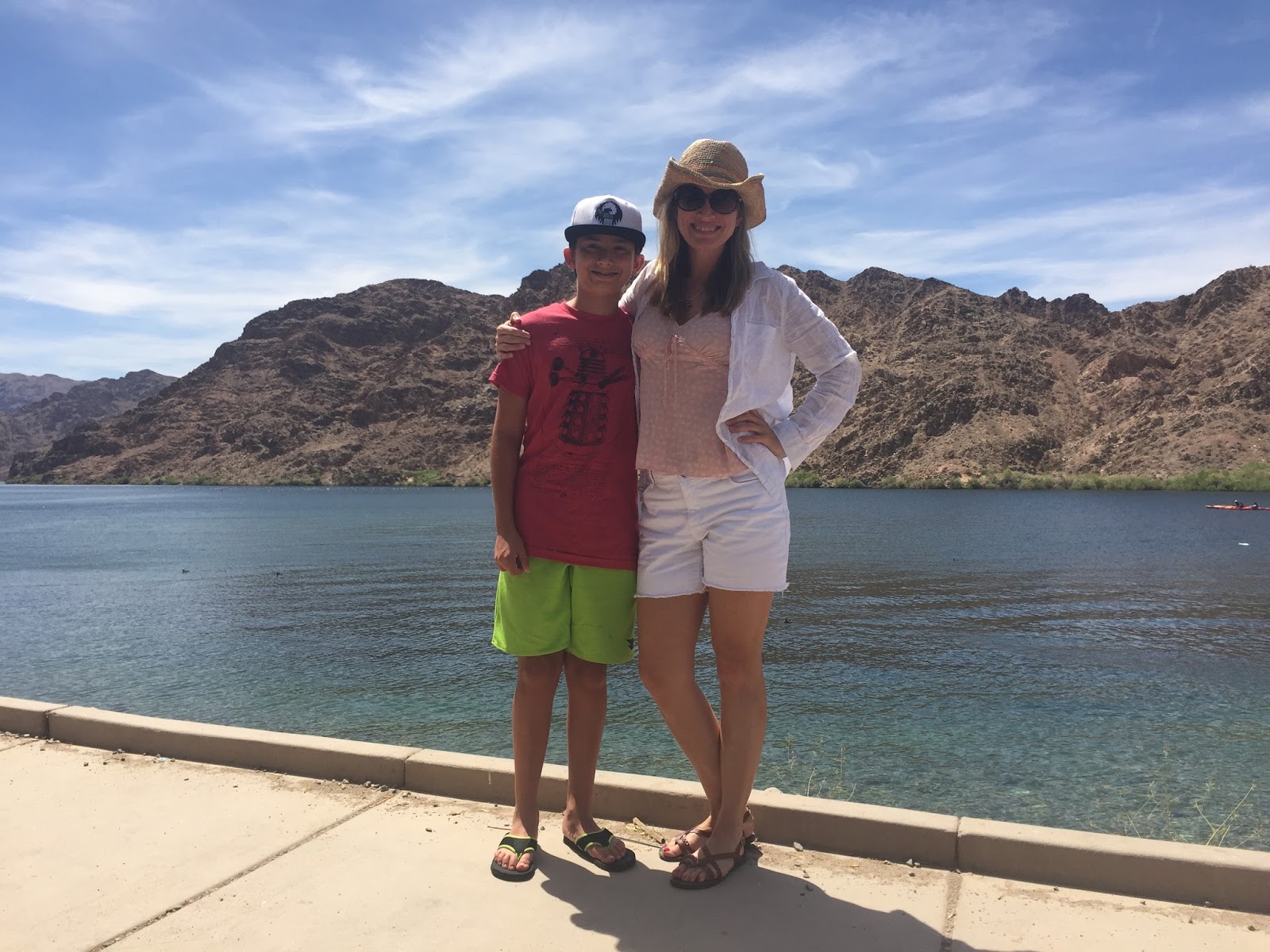
Grand Canyon, Lake Mead, the Hoover Dam, and Vegas


Aiden thought I was edging too far off the precipice of a rock jutting out above the Grand Canyon. 

“You mean this rock?” I asked as I skittered a stone off the ridge to see it careen toward the canyon floor. My son finally could see that I can be as wild and adventurous as any cowgirl who desires to experience the Wild West.

“You’re not that.” He said as if he heard my thoughts again.

Grand Canyon


 you mean this rock?

Some people do aspire to experience a little Cormac McCarthy; maybe they desire to meet a Preacher, run a town to the ground, or put a shewolf out of her misery. I mostly wanted to see what this desert really looked like beyond my imagination.

Out of our little arguments, my son’s favorite was when I said that the Colorado River at the Lake Mead Recreational Park was really Lake Mead itself. Aiden and I argued until we got to the Hoover Dam, where he finally showed me the satellite image of where we were just standing earlier, which was in the water at Willow Beach in the Lake Mead Recreational Park, between giant gray rocks, an unforgiving desert, intense heat, and wild rams straddling the ledges above the river.

He laughed himself crazy because he was right and won the day. At the Hoover Dam, we got reflective as we noticed the water line that significantly highlighted the water problems this area of the country faces. The Hoover Dam in June was baking, like walking on a pizza stone under a hot lamp beside a glass of water, so it was time to leave.

We had some pictures taken of us there. I told Aiden that I didn’t like them. I looked large and pasty. And this was when he said, “Mom, it’s one thing for you to not like a picture; you can just say, ‘I don’t like that picture.’ But when you say it’s because you look ugly or fat or whatever, it’s not okay. You’re beautiful. You always look beautiful in these pictures.”
Tears ran down my salty cheeks and I hugged him, thanking him for being such a sweet young man. I didn’t say another word about how a picture of me looked the rest of the trip.


 Lake Mead Rec Park...not Lake Mead. Colorado River.

Hoover Dam

Damn hot at this dam


Dusted off the desert for Vegas

That night we went to Vegas to see all the lights, MGM, New York New York and the Hard Rock Café. Aiden easily let two half naked cowboys grab me for one of those tourist catching photo ops and continued his laugh-fest.  It was comedy hour for the two of us dining at the Hard Rock Café, where he ate the “world’s best macaroni and cheese.”  I was convinced the table beside us received a stash of drugs in a bag from the server, but Aiden said it was just Hard Rock T-Shirts, and after a couple hours, we had enough of Vegas, especially when it seemed pot was seeping through the sidewalk cracks and I was fussed at by a casino host for having my son too close to the black-jack table. I think the three-year old in the stroller was the youngest there in MGM Grand but who knows if the family knew what time it was, or even what day it was. Aiden now can say his first time in Vegas was with his mother—what every boy imagines.
HOT 100F


I lost a dollar

 Fortune telling


Monday, July 17, 2017

How to set up an interview with Alice Hoffman...like Bridget Jones

The Rules of Magic (the prequel to Practical Magic) is out October 15th! My interview with Alice Hoffman will be out in September.

How cool is it when a famous author calls you from her house in Cambridge on a Monday?! My interview with Alice Hoffman lasted 30 exquisite minutes and with her permission, I have enough material for several pieces for several different publications. 

One of my favorite characters is Bridget Jones because she's beautifully ridiculous; she's witty, self-deprecating, painfully romantic, always wanting to prove her intelligence, has two answers or more for a single question, and she starts off in publishing, reading and promoting pieces of literature with honest regard and hopeful enthusiasm that one day she will be known for her talents as well.

Sometimes I fancy myself to be a little bit like her, and it's not with intention, but rather through default, inordinary events happening in my life; an experience can either take a flying leap off a cliff and careen into the vast and treacherous unknown or it can soar into the sky, higher than imagined. I have experienced both events many times, but this one is like the bird soaring thingy. 


The following is regarding how this interview came to be. I would like to point out that I was writing the email to Hoffman's publicist, sitting outside the Captiva Library and facing the old cemetery while using my hot-spot. The service was shoddy at best and for some reason my email that was written on a Monday didn't get sent until Wednesday while I was having lunch with my friend Tajh, discussing the fabulous email I sent Simon and Schuster, YET I still hadn't heard back. I wanted to show Tajh the email, so I went to my sent box, and behold, it wasn't there. It was in my drafts, having never been sent! I am grateful to Tajh for this moment of realization. (Thank you, Tajh, for helping me see that hot-spots aren't always hot, specifically near cemeteries, and I needed to "resend" the email right away.)

So, what is it like to answer a call from this incredibly famous author that was set up between you and Hoffman's publicist just days ago? One word: Thrilling. 

First, yes, I set up this interview as some tiny little person in the world of literature, thinking that I have nerve to write Simon and Schuster and ask if Alice Hoffman would speak to me, tiny-little-person, me. Did I drop the small magazine for which I was writing and a name of the director of the conference that she is attending in the fall as the key-note speaker? Yes, I did; however, I believe that most of my prowess has to do with the darn fine email I wrote. 
Anne....
Simon & Schuster

Dear Anne ...:

I'm reaching out from Fort Myers Magazine, and on behalf of Tom DeMarchi, head of the Sanibel Writers Conference with FGCU, who also gave me your contact, to interview Alice Hoffman prior to her appearance as the key note speaker. Personally, and especially this summer, I have become familiar with her work, and as an English teacher and lover of well-crafted novels, her work is inspiring on many levels, especially from her historical fiction to magical realism.  In fact, some of us on the island have formed a little Alice Hoffman book club, consuming as many of her novels as we can each week. I am finishing up The Museum of Extraordinary Things and have The Dovekeepers on my Audible. Of course we are all looking forward to the prequel of Practical Magic! The Owen’s family is most fascinating and I am secretly glad I also have gray eyes [yes, I wrote this-- ugh, dork]

Anyway, I understand she has limited time to interview as it is summer, and I have a deadline by August 15th for the September/October issue, which we would like to have out before the conference in order to gain more interest for the event. My best availability is anytime during the next few weeks and I can conduct the interview by phone. My questions may be geared around particular themes in her novels, magical realism, and Jewish mysticism; her ability to delve into characters so well, her overall writer’s craft and what she might talk about at the conference, as well as discussing The Rules of Magic [I asked much more and she revealed information never talked about in other interviews!].  

Again, my best times are anytime for the next few weeks, especially the next two weeks while my son is at sailing camp on Captiva Island and I’m spending my time writing at the library here across from the oldest cemetery called Chapel by the Sea, where shells wrapped in leather laces dangle from gumbo limbo trees like wind chimes for the dead. She would like to see this place, I’m certain [and she does want to go after I spoke with Hoffman directly about this place].

I would need to have the interview completed before August 7th since my deadline is the 15th. 

I would be happy to send questions prior to the interview and we can limit the time to 20 minutes [we talked for 31 minutes holy cow!].

Thank you so much,
Paula Michele Bolado

Enclosure: I have attached a copy of my interview with Sue Monk Kidd to show my 
experience. 
---


And Alice Hoffman called me the following week. 

Thursday, June 1, 2017

Heading out West

An article on our trip will be published September/October with TOTI Media Group

There's a difference between those who want to travel out to the Wild West to see the great Black Mesa of New Mexico, the Georgia O'Keefe blue skies, and seek the vortex while performing yoga in Sedona. Or there's me, the one who wants to experience the metaphysical cowboy, Mexican, and Native American dynamics in Cormac McCarthy's Crossing Border Trilogy. I know these desires only come from a crazy woman, so I'll just make sure I do those first three things mentioned just a minute of words ago.

My thirteen year-old son and I are about to embark on an adventure of a lifetime. Oh, these words always sounds so cliche. The opening of The Hobbit doesn't work, so how about, “We were somewhere around Barstow on the edge of the desert when the drugs began to take hold.” This sounds about right: Aiden screaming out of the window and me at the wheel pointing to the cacti ridiculing us with their inappropriate poses.

The fun we will have, the adventures unknown, the fights, the tears, the bad tacos and the good ones, and the friends we will get to see again after many years, all await us out west. No wolves or pretty horses to tame, at least I don't suspect, and all the fear and loathing of Las Vegas will be set aside for this mostly proper trip with planes, trains, and automobiles, minus the trains.

Friday, August 2, 2013

Road Home

Road Home
By Paula M. Bolado

You are dead. Stick shift still in hand
and the old gravel road of Big Cove begins.

Tiny chunks of mica and quartz crackle under the tires.
Birds bounce under the rhododendron.
The car rolls to a stop beside a house, gray and green,
where an old post covered in lichen says LINQUEST.
He died thirty years ago and the old sale sign
across from his broken, red mailbox has rusted
and the realtors don’t work there now
because they too have died.

Away from the Linquest place, there’s a sharp incline.
Your little car needs low gear or it will slip back into the trees
and wrap around the poplars below—
Below, where it is dusty enough that if were you to go back,
The path would be gone;
the dust never cleared.

Half way up Big Cove, it should still be light out.
The light effervesces through the leaves of the giant poplars
and speckles the grave stones of the children who died long ago.
Long ago, when the baby pines fought for sunlight
over and over again under the poplars and always lost.

The light will guide you beyond an abandoned shack, a silo, and
another grave. Up a steeper, narrower path etched into the mountain,
where you remember the days of youth, where Danny and Tom
threw sticks at squirrels and shot BB guns in these woods.
Tom had just kissed Julie, and Julie was a secret friend on Saturdays;
the days when you shared stories Tom never would tell,
because Tom went to church, and your parents were never sober enough to go.

Watch for coyotes and black bears or an occasional stray dog or two.
The light is fading. You must watch for potholes
and deep pockets covered in leaves beside the road;
the road is not always kind it seems;
they are a hindrance on voyages like these—
these upward climbs from the purgatory below.

You want to say, “I can go no further; here I turn away.”
But your mouth is stopped with blood.
My house, golden in color, with marble floors
and cascading fountain sculptures is always
visible in the fleeting light.
I will wait for you, but will you wait for me?

Turn right, then sharply left, and follow the road.
Turn quickly or slide along the soft sand and rocks,
like when you were riding dirt bikes with Julie,
and she slipped along the dirt, screaming  in pain.
The blood splotched her clothing and you were scared,
scared like the children in the house that burned down in the fire;
their small bodies charred black like toast.

It was the fire Mr. Lindquist started before he shot himself in the mouth.
He was a lonely man for many years, like you.
But you would never do such a thing. No.
Such madness of men is treated at the bottom of the mountain.
If you’ve made it up this path, past Linquest’s place,
the grave stones, and the potholes, you have made it far enough.

Park and walk up another steep path.
Through black soil, buckthorn, blackberry briars, and multiflora rose,
and your legs will hurt just as they hurt
when you rode off for help because Julie had broken her leg,
and no one was around, and you became lost riding through
rambles of rhododendron, pushing your bike over deep creek beds
while thinking a shortcut was better. Remember?

She waited in the woods for hours, but you were lost.
Her father found her finally.  
Julie married Tom and they had four kids.
You never finished school and ran a red light one night
when it was raining, and now you are here.

You just got lost. I just got lost you have thought over and over again.
This is your second chance to find me.
I will be waiting for you in a golden house with the fountain,
Where I won’t abandon you nor do you harm.
You’ll find me; just keep heading up the mountain.

I will save a table for you with the finest of linens.
We will wear our funerary gowns, you and I.
Will you stay for dinner?

_________________

Friday, December 28, 2012

The Truth of a Junonia (excerpt from a memoir)


The Truth of a Junonia (excerpt from a memoir) by Paula Michele Bolado

As soon as the waves pulled back, thousands of rainbow-colored coquina shells glittered orange and gold along the shore before quickly burrowing back into the sand. While watching my son dig at the sand and shells, I remembered at his age what it felt like to scoop the tiny coquinas which wriggled down into my palms. Holding coquinas in his own hands, Aiden laughed at the feeling. His slim, four-year old body was covered from head to toe in white sand and broken shells. Highlighting his smiling face were the colors of the beach—a perfect creation as if the sea itself had formed him from water and sand.
He asked me to dig a hole with him. I sat beside him, just us, on our vacation—without any other family. Here on Sanibel Island, as the sun started to set, all we needed were the sand, the water, the shells, and each other: mother and child.
Shells covered the beachscape in patchy blankets of tans and creams. We dug our toes in the soft, damp silt of the beach and watched the sandpipers dance along the shore. As we scooped away at our hole, Aiden noticed an olive shell beside my toes. This type of tulip snail is olive-shaped, glossy, with a brownish-grey exterior and an undulating perfect whorl shaping a pink pointed tip, and lastly speckled with spots of black. I had never seen such an olive shell before.
“How are shells made?” My son asked.
“Well,” I started, thinking carefully how to say this: “They are formed from the animal inside, giving it protection in the Gulf, where currents and predators could harm its life. As the animal grows, so does the shell it carries. In order to house its increasing size, the animal adds more layers to the shell as time goes on.” My son nodded while he turned the shell around in his hand, the sun glinting off the enamel. All my years as a shell fair kid on Sanibel paid off in this moment. The shell in my son’s hand had been through some challenges; we observed the scratches along its back and the small hole that penetrated its hard exterior. Such a hole, as small as it was, could make the entire shell vulnerable to predators. “I’m sure the animal here tried to fix its house.”
Aiden picked it up. The spots on this olive shell reminded me of the junonia from the same tulip snail species but more rare. My mother and I spent years combing the beach for the junonia. This palm-sized, thick-shelled gastropod, ringed with large, giraffe brown spots normally lives off-shore, but on rare occasions, it washes to the beach as an empty vessel. The residents of Sanibel Island prized it for its rarity, its beauty, and the adventure in finding one. My mother never wanted to buy the shell, even though it could be bought; rather, the junonia was something to discover.
The rare junonia shell is usually found after a powerful storm. Out of the quarter of a million different types of shells washed up along Sanibel’s coast, the junonia is the most valuable and finding one is a gift. Such a gift from the sea always comes at the end of an evolutionary cycle of the shell’s life; from the animal to a speck of sand, to a chamber of beauty, to the death of the creature, to spinning around in a storm’s raging waters, until finally the junonia is exposed as a gemstone along the shoreline and ends up in the hands of a woman looking for a sign. My mother found that shell on her own one day and she believed it was a redemptive sign, as she was a single mother before she met my step-father.
The name of the junonia shell refers to the Roman Goddess Juno, protector of the well-being of women. As an immortal being, Juno is depicted as a woman of majestic size and beauty. She appears in Shakespeare’s last play The Tempest, as queen of the god’s, and her name is used in the movie, Juno, which is about a girl going through pregnancy alone. I thought about those things, about Juno, the junonia shell, my mother who had passed away years before, and looked to Aiden, who was still digging into the sand with the olive shell tucked into his pocket. My marriage was ending at the time and I was going to be a single mother; the stigma hovered over me like an ominous gulf storm. But it was something I had needed to do, as I had a hole in my own shell created by an emotionally abusive husband that I needed to repair. There were dark days ahead for us, but at the moment, I was present with my son, contemplating the beauty and strength that shells withstand as they tumble out of the ocean and into our palms as keepsakes.

After the divorce and graduate school, I kept that olive shell and others like it nearby, especially the ones with holes, because they represent how even the strong are vulnerable and the need to repair our own holes to live life beautifully.   


Tuesday, December 11, 2012

A Shell's Secret


In the deepest corner of a shell, no true black paint can devise its darkness. For the artist, Payne’s gray is near to the depth, where a bluish-gray fold bends and twists in the void of light. This home is where the animal forms her shell armor, excreting sand granules slowly and methodically from a tighter place, a pocket, a crevice, a junction of life where protection began. Using just a pinpoint of blue and Payne’s gray proves that the ocean left its one darkest, drop inside. The hard shell reveals a surface of undulating curves coming out of the penumbra, whipping upward, and wrapping back around to its tip. The body of this univalve is a cone of purity, no holes, though it has been empty for some time, leaving a hollow home abandoned by a creature long ago. The only entity that resides in that deep crevice, where the painter reaches for the right shade, is that singular spot of gray-blue, blackness the ocean secretly left behind.
Image result for shell


Wednesday, September 26, 2012

My Stomach Bug (OH gosh is it a bug...a real bug?)

Image result for man in hospital bed with a beard


Belly Pains: Is it in my head, our heads, ok then, whose head?

I hate self-diagnosis stuff on the internet because one always end up the in weird, hypochondria-tic world of the web, worrying about stomach ulcers the size of hands, parasites with teeth, two-headed babies, and tree man visiting (I always end up in You Tube watching tree man's struggle to drink out of a cup). I'm just one more click away from discovering I've been abducted, and some Prometheus alien is harboring inside me. 

So, I've been struggling with a stomach ache for about a week. I've since had an ultrasound on my gallbladder to check for stones, have been given some medicine for pain, and have talked to a psychotherapist for the obvious reasons that maybe it's in my head. Nothing has helped and no answers have come, so I've decided I'm nuts and only people on the internet can help because that always makes things better and the internet never lies.

I wonder when "stuff" starts to really be in our heads? This could be a moment that happens suddenly or sharply, such as when we think there is one more step to the staircase, but the foot lunges awkwardly to the ground because there is, in fact, no more steps to take. Or, could the saying, "it's in your head," really take a lot longer, a gradual process of becoming ill upstairs (not down). For example, what we are afraid of most, like getting cancer, tumors, and other maladies, could really manifest in some sort of alternative reality, where we are sick and dying and there is no cure; theoretically this reality only exists in our heads. I'm not undermining anyone who has these terrible illnesses, but what if we all are sick because we THINK we are sick, even though we are completely fine according to everyone else? 

This is my case; I have created a world of  gastrointestinal illness, and subsequently have been treating myself as though I do indeed have gallstones,  a parasite (good Lord), or a ruptured ulcer that is getting infected as we speak and is a precursor to stomach cancer, which is the most painful of all cancers according to some guy's post on Live Heath Chat room 201. What can I do to prevent getting more ill? It's a handicap at this point, too, and I will probably need a tag for my car.

It's pretty hard to go around sick in the head, exhausting in fact, because no one understands that not only am I sick mentally, but in this alternative reality I have created (World 2), I am physically incapable of getting out of bed (even though I just went grocery shopping in World 1) ---it's that bad. Does anyone feel sorry for me yet?

There is nothing worse than feeling bad and finding a discussion group online where everyone is commiserating about their trial and tribulations. Some folks even list all the surgeries they've had, where underneath their esquire, there's usually a quote from Gandhi or Maya Angelou (or someone else who has truly has suffered).

Here's what I've seen:

"I have a terrible stomach pain for three months. I've had four CT scans, three ultrasounds, and still no one can find anything wrong with me."

John Burge
Appendectomy '04
L4/L5 Laminectomy '07
Revision L4/L5 Laminectomy 07 (never left the hospital because I liked the jello)
Lumpectomy (yes, I'm a dude) '09
Vasectomy '10 (just on a whim)

“There is no greater agony than bearing an untold story inside you.”  [how ironic]
― Maya Angelou


We have emerged as a new society, especially on the internet, where attaching our maladies to our names becomes a label of importance, significance, and dubious gallantry. Man, it's not cool to have so many surgeries. Do you think some it is in your head? Hmm. Maybe I should go back to the doctor for my belly ache, and even though he thinks I'm fine, my head and the internet tells me differently.

Thursday, May 31, 2012

Losing Miranda

published in The Nomad


Losing Miranda by Paula M. Bolado

O, wonder!
How many goodly creatures are there here!
How beauteous mankind is! O brave new world,
That has such people in't! -The Tempest, Shakespeare

It is Tuesday.
The evening steadily took the light,
dragging its hours to her bed.
Her mind sluggish, and her face—
She once was beautiful but now left with sunken eyes,
deep like a hollow lost ship
where the dripping of leaking water
fills over the heads of the few souls
who have been sacrificed by wild waters.
Those who sought the soft rays—
rays breaching the cold pitch of her eyes—
only became lost again.

In fetus pose, she nurses the bellowing moan
deep inside her womb,
while her boy is sleeping in the next room making
child-like grunts and noises children do,
where he has to sleep with his lamp shining
against the horrors of his youth.
To her it is luminescent, shining, and painful
along her own bedside where she sleeps,
always on the right side.
Tenderly, she reaches to the frozen side of the bed
where nothing lies but cotton folds like razor blades.

The night gathers an orchestra of crickets and frogs
all shouting obscenities at her.
She lies back into the chronic ache and black pool of memory,
letting the malicious water slam against her vessel.
The Black Raven beats against the hull before he swoops down upon her chest
picking, scratching, tearing—
the remains of the day.

Away went the prayers to her Father,
the noise drones, and she slowly drifts,
steadily toward a shape in the dark,
molded by gray matter,
making sense as she draws near
seeing something, feeling something
like a touch, or a stroke, felt between two lovers entangled
under a woven congregation of lustrous stars, vows, and a baby’s cry.

Awakened by the sound, the electricity is out!
Her son is alone in his room.
Miranda wonders where the angels went.
Sinking into the night, being brave in her vessel,
Wednesday approaches.


Creativity Developed in the Classroom


My thoughts on creativity in the classroom and DON'T YAWN

Since I’m a literary person (at this moment in time, teaching college writing courses), I’m drawn to using analogies and metaphors in developing creativity in the classroom. As a mechanism for divergent thinking, using metaphors and analogies allow for old ideas to be transferred into new ideas, new insights, and new perspectives, which are gained from borrowing and synthesizing information, allowing for originality to emerge. It sounds like a paradox: to borrow old ideas in order to form original ideas. My belief is further reinforced by the notion of pulling ideas, merging them with others, and creating vastly different perspectives. I think that retelling a story (something seen) through art, literature, film, writing, etc., is exactly creative. The whole idea that "everything has been done" is true to some degree, but the personal perspective will always allow deviation from the original story. Unless you are copying a master painting, for technique, it certainly won't be celebrated as original, but it still takes creativity to accomplish such a task. A painter of the past used unique paint strokes to achieve certain degrees of light, and the copying artist has to also figure out the maneuver to achieve the same result.

What if instead of painting dancing ballerinas, using the same Impressionist movements on canvas Degas captured with his works, we painted dancing pandas? How would pandas dance together? Would they bump around with their fatness and be less graceful, then let’s say, thirteen year old girls? Would the paint strokes be more chaotic and anxious, as opposed to Degas delicate, graceful strokes and soft colors? We have to mimic, copy, mold, create, in order to evolve to become original. 

It is pretty fantastic to think that just by watching chickens squeeze through fences, the idea for the cotton gin was developed, or comparing how a germ enters a body to the conquest of Mexico could help kids draw relationships; basically, relating dissimilar things and drawing conclusions by analogous comparisons. This allows the student to think in individual terms (synectics).  I read this somewhere: “Making the strange familiar” and “making the familiar strange." There is so much liberation at play for the child, and for the teacher, when students are able to think abstractly!

 When using visual images, direct analogies allow for literary gems to emerge in the students thought process. For example, referring to a pencil as “tired and worn out from the day,” according to my son after answering a question about how a pencil feels (if it could feel), allows the visual to emerge that the pencil has been picked up, chewed on, drawn with, erased with, stories written with, math problems solved with, and many other things the life of a pencil goes through during the day.  We generally call attributing human feelings to non-animate things or animals as anthropomorphism, but supporting empathetic identifications with living or nonliving things, helps kids with providing the basis for discussions, writing projects, art activities, or design projects. Additionally, any other problem solving or problem finding exercises are supported by using analogies.  

Kids love to draw, they love humor, and allowing them to access prior knowledge on stories, will help them with original ideas.  Adults do it all the time! I just saw a movie trailer for Abraham Lincoln: Vampire Hunter on television.

It is a shame that so many of our classrooms are operating under constant threats of tests and grades centered on controlling extrinsic motivation. In the past, when I taught at-risk youth, I used extrinsic motivation to control behavioral problems with my students. I would give tickets out to each student for their best behavior for the day. They would sign the back of the ticket and I would put it into an envelope. At the end of the week, I would draw a couple lucky names, and whoever had the most tickets in the envelope, the greater the chance their name would be drawn. They would win gift cards, gag gifts, candy, whatever. This worked for a while, until the ones who never got tickets became increasingly more hostile. I wasn’t good at dealing with these particular individuals as a first-year teacher, but damned if I tried my best. As far as creativity goes, when they drew something or wrote something amazing (even the kids who made bad choices), I put their work up on the board, and it stayed there for a long time. Peers would go up to see what they’ve done. Just by having their peers say "wow" or "cool" was enough of an award for their creativity.

Autonomy, Mastery, and Purpose: intrinsic motivators for corporations, based on Dan Pink’s evaluation supporting creativity.  We know how well this works with kids, and have seen this work well with huge companies like Google, Microsoft, Zynga, and Zappos, so why aren’t many other businesses adapting this philosophy? I look at it like Bain Capital and standardized tests: only the winners (the successors) are the small majority, while the rest of us get taken to the bank, are left picking up the pieces, and are trying to figure out what went wrong.


Sunday, July 17, 2011

Spider Shock


     A giant brown spider left its molting hanging outside the back door, which was adjacent to the refrigerator. Every time Travis opened the fridge, he could not stop but glance at what was a seemingly unnatural occurrence in nature. He tried opening and slamming the back door to see if its exoskeleton would gently slip into the wind toward the woods. But each time he slammed the door, the giant thing hung more closely to the window. He decided to toss a cup of water into the direction, thinking maybe it would slip down, but as soon as the water hit the glass, eight cold, hairy legs fell down upon his arm. The owner of the carcus  faced him with eight beady eyes before latching onto his skin. Everything went black for a few seconds, as he questioned what just happened. A needle began traveling up his arm, cutting through his tissues--cold, sharp, spreading. He had never seen this North Carolina woods spider with big brown hunches and silvery course hairs. What kind of spider molts?
     Regaining his senses while releasing some profanity, Travis flung the spider right into the kitchen where it landed into the sink. He desperately used the sink water sprayer until it flattened into the drain. He tore six paper towels and courageously pushed them into the drain hoping to scoop or scrape the damn thing away; a twisted mess of brown and black goo dismissed for its intrusion.  Life for that spider met him at all three stages.  Travis fell to the floor to fetal pose, his arm stiff, his neck freezing each second. Make that four stages.

Sunday, May 1, 2011

video and tanning salon attack cat

Recently, I came upon a large black and white cat lounging in tanning salon (slash) video store. Not only was I astonished by the sheer size of the beast,  but within a second of spreading it's three-foot frame over a video shelf containing screwball comedies such as Meatballs and Weekend at Bernies, the cat sprang to its feet as an unsuspecting dog and owner had just walked inside. Little did they know before coming in the store, with the intent of renting a romance, the terror that actually awaited them. With claws pronated and razor teeth gleaming, it flung itself on the dog like a killer whale lunges after a giant walrus. Videos went flying, cups of tanning lotion whished and sprayed in the air, Meatballs leaped from the shelf and into the garbage can, and the owner became entangled in the horror and gore-- an amazing discovery channel event one might never have the chance to witness again. The dog survived, and the cat lives on-- elongated over video shelves containing raspberry movies such as: Gigli, Catwoman, and Birdemic: Shock and Terror.


Wednesday, August 4, 2010

*Waffle House Smoking Vignette (*when you could smoke there)

     The thing about a Waffle House in Western North Carolina is that the smoking section is the entire House. People in the bar area smoke as they eat, dangling their legs over rubberpad stools while hunched over waffles and eggs. Near the bathrooms folks like to be more isolated so they smoke alone, turning and rustling pages of the local paper. Beside my booth to the left there is a family of smokers, eating, and making gray faces as smoke engulfs their waffles. The three-year old, curious like taking a first sip of beer, reaches toward the cigarette dangling out of grandma's mouth. She doesn't notice the cigarette is gone because she is intensely looking out the large windows to the mountains of long ago. The little one holds the cigarette and attempts to bring the butt to his lips, but then turns it the wrong way where the red cherry flickers before his eyes. The mother notices and grabs the cigarette. She says no, no, to the child. Grandma wakes up from the 40's and asks where her Winston went.
     The people who work at a Waffle House are incredible multitaskers. A man can pour waffle mix into the maker, shuffle a couple sausages with his other hand holding a fork, and smoke a Marlboro with an ash-tail as long as his gnarled pinky. A waiter can deliver eggs faster than she delivers coffee, then leaves you hanging for your hash browns. “They’re on the grill and will be up in a sec hon.” I look over to the gnarly pinky man with the plume of smoke rising above my hash browns. I’m less than anxious now to have them but my delicious buttery eggs and empty cup of coffee need company.
     “Can I get a refill of coffee?” I ask, thinking she will scurry to the half-full pots with red and black rims and come back apologizing.
     She looks at me and says, “I’m waiting on your hash browns first.” Then she retreats to the bathroom area and I don’t see her again for the rest of my meal. I wonder what I said wrong. What part of my requests sent her to the Waffle House bathroom. Is she crying? Is she hurt? Is she smoking? I wonder if I need to leave a tip, because I could use the cash. The cook delivers the hash browns, almost tossing them across the table like a frisbee full of grease. I ask another waiter for coffee. He complies with my request and even brings me a tall glass of water—full of ice, refreshing and wonderful, with little tiny ash particles floating above the icecubes.

Thursday, May 13, 2010

"Smelly Cat" and "My Cat Moses Smokes Too Much"

This week, I took a piece from this blog about my cat Moses who smokes too much (see entry) and turned it into a poem for a class of students. I added my guitar to the poem and sang to them. I was like Pheobe from Friends singing "Smelly Cat" with four chords. But my song is called "My Cat Moses Smokes Too Much." It's much more of a heartwarming tale with a cat struggling with emphasema. Oh, and he also drinks.

We are currently working on a program for him, which is a difficult task because there aren't many open feline smokers out there willing to get help the way Moses seeks. He does need help and he knows it. We heard his cries just squeezing him real tight (with an endearing hug) until he meowed--and later scratched. We knew he was meowing a "yes" to treatment.

Anyway, the students enjoyed the poem. It was a great way to introduce myself as their teacher for the week and next fall. I feel comforted students now understand the real struggles cats face with nicotine addiction.

Friday, February 19, 2010

My Cat has Emphysema

Moses Saga Part 17 I took Moses back to the vet today to get a shot because of his runny nose and weight loss. He wasn't breathing well to be frank. He was immobile and  plain mean when you moved him. I know he's just old and crotchity and smokes too much. The vet told me he needs to stop or a tumor will continue to develop in his nasal cavities. He also smokes in the house! I think. He's been sneezing and coughing for a couple months. As for the cigarettes, I know when I'm not looking he must always have one lingering in his mouth, with a plume of smoke engulfing his tabby, hairy face. It's a mockery of the rules in the house! The vet told him enough was enough—also, for him to stop drinking so much. We checked to see if he had diabetes. He's always drinking and smoking, and I'm certain of this.


As the appointment dragged on, we all sat down to talk to Moses about this but he just looked off in space like he had no interest. I could tell in his yellow eyes he was thinking about a cigarette. I've tried to get him to stop before, but he sneaks off when I'm busy doing something in the house. I don't know where he goes, but I know he is smoking. I'm not sure where he gets these packs of cigarettes. There must be a rogue animal supplying him. So at the vet, we discussed our options: to put him to sleep or get him to stop smoking.


Moses continued to look off into space, no matter how hard I pleaded with him to look at me and take me seriously. He nuzzled my hand, but I took it away. I thought psychologically it would be best for him if I didn't enable any kind of affection. What he is doing is wrong. He's breaking my heart and he needs to stop. I remember the days of long ago when I had to watch his every move (because we lived in a small apartment in Boston). He would sit on the stairwell playing with the pigeons, making friends, and staying sober. I began to tear up with these memories until finally I got him to pay attention when I gave him a heartfelt hug. He meowed when I squeezed him tight, and I know that was a sure sign that he would stop smoking. He's on a patch now and on the road to recovery.

Monday, February 8, 2010

My Abstract for the Graduate Research Symposium at WCU

Paula Michele Bolado


Wulfert Road and the Alligators: Turning Fear into Respect for Sanibel Island’s Natural Ecology


“Wulfert Road and the Alligators: Turning Fear into Respect for Sanibel Island’s Natural Ecology,” a creative nonfiction piece, describes the incredible natural beauty of Sanibel Island, Florida from the perspective of a young precocious girl. While walking home from the bus stop on her ninth birthday, singing and dancing along the way, she suddenly is confronted with the “Marlon Brando” of all gators, a marvelous twelve footer in the road. “Alligators usually were what all the kids cared about most because they have incited curiosity and fear in the hearts of many on and off the island.”


Thematically, her fear of the beast grows into a healthy respect for all the oddities of the island, including spiders and panthers. However, the young girl shows how fear can serve as another reason to control the unknown: development, a tragic consequence for 800 acres of Sanibel’s ecosystem and habitat of animals, birds, and creepy crawlers surrounding Wulfert Road. The endangered woods have been replaced with golf courses and stucco homes, proving developers can wipe out an entire ecosystem due to their fear of the unknown, the unexplored, and the unadmired.


The idea of this piece is to express how a child can see the world of Wulfert Road and the alligators, partly with fear, mostly with wonder, and making peace with it all. She does this with heightened sensory details, where one can smell the salty bayou and oysters and almost touch a heron’s wing: “One night, I saw the largest great blue heron wading in low tide by the dock. It peered out to me through the knees of the mangroves. I watched it lift one leg and then the other, like a ballerina, over the mud and oysters. I couldn’t help myself, so I crawled into the mangroves to get close to the five foot high dancer. It was so beautiful I wanted to run my fingers across its oily grey feathers. But as I neared, the heron took off like a great glorious blue plane.”